
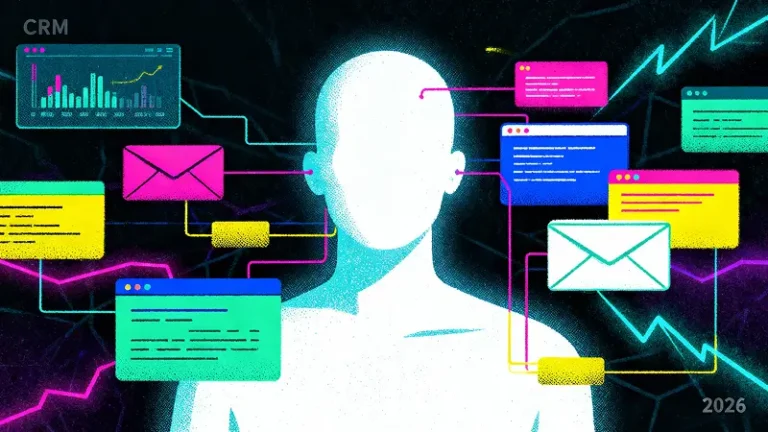
As we step into 2026, CRM and email marketing are no longer about sending campaigns on a schedule. They’re becoming systems that anticipate user needs, read behaviour in real time, and deliver messages that feel uniquely personal — almost intuitive.
So what exactly will shape CRM-powered email marketing in 2026?
And more importantly: how will these changes impact your business?
Let’s dive in.
1. Hyper-Personalisation Becomes the Default
The biggest shift of 2026 is clear:
Generic emails are dead. Behaviour-driven communication is the new normal.
Brands now rely on:
- Browsing behaviour (scroll depth, time on page, interaction patterns)
- Purchase intent signals
- Movement between segments
- AI-based prediction models
to build one-to-one experiences at scale.
“In 2026, your customers expect you to know them better than they know themselves.”
Hyper-personalisation is no longer an edge — it’s a baseline expectation.
2. AI-Powered Campaign Creation (Human + AI Hybrid Teams)
2024–2025 was the warm-up.
2026 is the year AI steps into the driver’s seat.
AI now:
- Proposes campaign themes
- Suggests segmentations
- Tests subject lines
- Detects weaknesses in customer journeys
- Predicts conversion likelihood
Marketers focus on strategy, tone, and creativity — while AI handles the heavy lifting.
This makes teams faster, more consistent, and far more data-driven.
3. Zero-Party Data Becomes the Most Valuable Asset
As tracking becomes more restricted, companies rely on what customers willingly share.
Zero-party data sources include:
- Preference surveys
- Onboarding selections
- “Which content do you want from us?” forms
- Quiz outcomes
- Voluntary behavioural signals
Brands that use zero-party data inside their CRM workflows see 35–60% higher open and engagement rates.
Why?
Because the messaging finally aligns with what the customer actually wants.
4. Behaviour-Based Triggers Evolve Into Micro-Moment Automation
Forget the old triggers:
- Cart abandoned → send email
- No login for 30 days → send email
2026 introduces micro-moment triggers — tiny behavioural signals that reveal true intent.
Examples:
- Viewing a product for more than 3 seconds but not scrolling
- Adjusting price filters but not adding anything to cart
- Zooming in on a product image
- Returning to the same category 3+ times
These micro behaviours create ultra-specific journeys that feel almost human.
“Brands that master micro-moment automation will dominate conversions in 2026.”
5. CRM Systems Become Intelligent Advisors
CRMs are no longer passive databases.
In 2026, they interpret and recommend.
Your CRM will say things like:
- “This customer is at risk of churn. Send this specific campaign.”
- “This user is likely a future VIP. Trigger an early upsell.”
- “Purchase probability: 72%. Optimise this moment.”
CRM becomes an advisor, not just a system.
Marketers become strategists, not operators.
6. Email Content Gets Shorter, More Conversational, More Mobile-First
People want simplicity.
2026 emails are:
- Short
- Snackable
- Conversational
- Minimalistic
- Cleanly designed
- Optimised for fast consumption
Instead of long paragraphs, brands use text blocks that feel more like messaging apps.
Shorter content → higher open rates → better deliverability.
7. Unified Messaging: CRM + Email + SMS + WhatsApp + Push
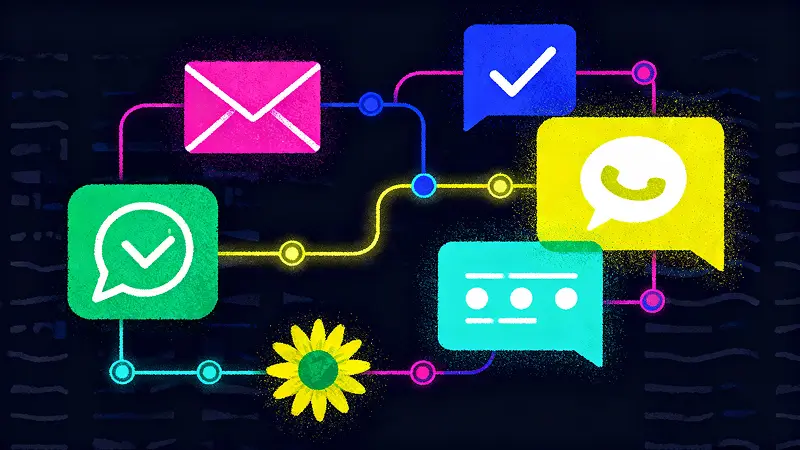
In 2026, CRM is no longer just about email.
The new model is Unified Messaging.
A single CRM manages:
- SMS
- In-app messages
- Push notifications
This creates connected user journeys across multiple channels.
Example:
- Signup → welcome email
- One hour later → SMS with offer
- When browsing → in-app message
- If they stall → WhatsApp reminder
This level of cohesion becomes a major competitive advantage.
8. Predictive Delivery (Send When EACH User Is Most Likely to Engage)
Sending at 10AM for everyone?
That era is gone.
AI now analyses:
- Past open times
- Device habits
- Day-of-week behaviour
- Engagement patterns
And sends the email at each user’s optimal timing.
Examples:
- Sarah opens emails at 08:40
- Mark prefers nights around 21:15
- Ali never reads emails on Fridays
The system adapts to each person individually, improving performance instantly.
9. Real-Time Dynamic Content Powered by User-Generated Data
2026 emails behave like mini webpages that update automatically.
Content adapts based on:
- New reviews
- User’s past ratings
- Community behaviour
- Trending products
- Live stock updates
- Real-time recommendations
Instead of static newsletters, users receive living, personalised content — powered by actual customer activity.
10. Privacy-First Email Marketing
Consumers in 2026 are more aware, more cautious, and more demanding.
This drives brands towards:
- Transparent data usage
- Clear opt-ins
- Stronger GDPR compliance
- Honest unsubscribe flows
- “Why did I receive this email?” explanations
Trust becomes a marketing tool.
Brands that earn it – win.
Mini Case Study: What a 2026 Automation Flow Looks Like
Scenario:
A user views a product page for 7 seconds, then leaves.
Here’s what happens:
- CRM detects quick-exit browsing
- AI assigns a purchase-intent score
- The system builds a tailored reaction flow:
- Short email: “Need a quick summary of that item?”
- WhatsApp message: “I can help you compare two similar products.”
- If no action → 48 hours later: review-based email
- CRM suggests: “Move this user from warm → cool segment”
No manual work.
No delay.
Pure intention-based marketing.
Conclusion: 2026 Is the Year of Smart Contextual Automation
One word defines the entire shift:
Context.
Right message.
Right moment.
Right channel.
Right person.
CRM is no longer a system that sends campaigns.
It’s a system that thinks, interprets, and responds in real time.
Brands that embrace this new era of hyper-personalisation will stand out.
Those who rely on mass emails will quietly fade out.