

Most CRMs are built for one thing: closing new deals.
But for many businesses, the real revenue comes from:
- Renewals
- Repeat business
- Long-term relationships
If your CRM stops at “closed won,” you’re missing the bigger opportunity.
Here’s how to use your CRM to support both new sales and retention
1. Keep One Complete Customer Record
Scattered data kills relationships.
Your CRM should bring everything into one place:
- Contact details
- Emails, calls, and notes
- Open opportunities
- Support history
- Renewal timelines
When everyone sees the full picture, conversations don’t reset after the sale.
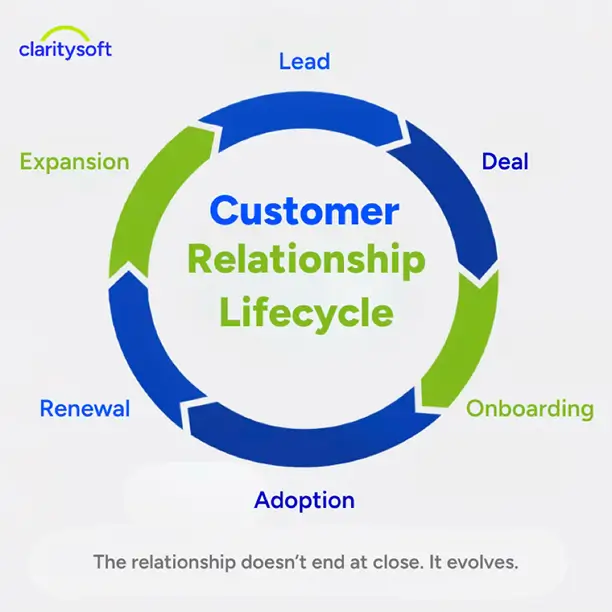
2. Track the Full Customer Lifecycle
Most pipelines stop at “closed.”
They shouldn’t.
Add stages like:
- Onboarding
- Adoption
- Check-ins
- Renewal prep
- Expansion opportunities
This turns your CRM from a sales tool into a relationship management system.
3. Make Follow-Ups Effortless
Retention is built on consistency.
Your CRM should make it easy to:
- Log interactions quickly
- Set reminders
- Schedule regular touchpoints
If it’s hard to use, it won’t get used, and relationships go quiet.
4. Surface Upsell & Expansion Opportunities
Your best growth often comes from existing customers.
A strong CRM helps you spot signals like:
- Increased engagement
- New needs mentioned in conversations
- Product usage changes
The goal is to expand naturally, not force new sales.
5. Give Leadership Visibility Beyond Pipeline
New deals are only part of revenue.
Your CRM should also show:
- Upcoming renewals
- At-risk accounts
- Expansion opportunities
- Overall customer health
This creates predictable, stable growth, not surprises.
6. Keep It Simple Enough to Actually Use
This is where most CRMs fail.
If your system is:
- Too complex
- Too slow
- Too rigid
Your team will avoid it.
And if people don’t use it, nothing else matters.
The Bottom Line
A CRM shouldn’t just help you win deals.
It should help you keep and grow customers.
Because the real value isn’t in the first sale.
It’s in everything that comes after.