Discover how gamification can boost user engagement, customer loyalty, and sales for your small or medium business. This guide walks you through core game mechanics, examples, and practical ways to implement gamification without heavy budgets.
What Is Gamification?
Gamification applies game structures in non-game contexts. People naturally enjoy games because they are fun, motivating, and rewarding. Since we are more likely to repeat behaviors we enjoy, gamification has been successfully applied in areas like:
- Customer engagement
- Employee motivation
- Education
- Health and fitness
- Sales performance
Many brands today use gamification to increase engagement across marketing, customer service, and product experiences.
Core Elements of Every Game
All games share these elements, which can also be applied to digital products, marketing campaigns, and customer journeys:
- Clear goals
- Defined rules
- Continuous feedback
- Progress tracking
- Social interaction
- Status or recognition
Why Gamification Works for User Engagement
Gamification taps into basic human psychology by creating:
- Motivation through progress
- Dopamine from rewards
- Competition and social validation
- A sense of achievement
This is why gamification for user engagement consistently outperforms passive content or static experiences.
Gamification Example: Fitbit and Customer Engagement
Fitbit tracks daily steps, sleep, and activity levels. But real engagement comes from its gamification features:
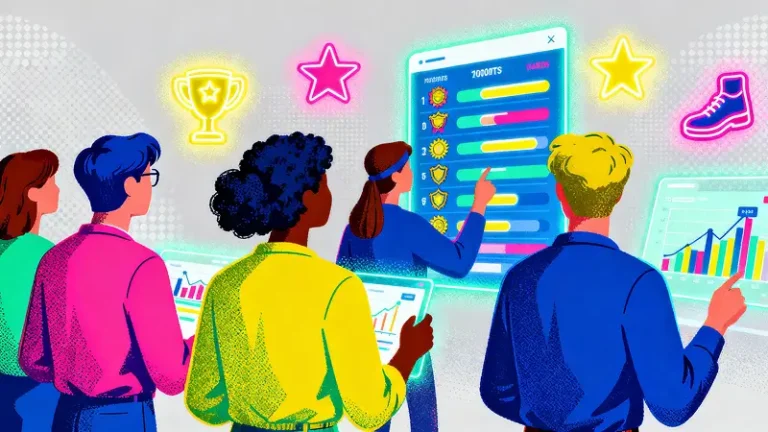
- Virtual badges for milestones like 5,000 or 100,000 steps
- Leaderboards that rank users by activity
- Social sharing of achievements
- Friendly competition through groups
As users chase badges and rankings, Fitbit benefits from:
- Higher daily usage
- Stronger brand loyalty
- Organic social exposure
- Long-term customer retention
Gamification improves user health and Fitbit’s marketing simultaneously.
How Gamification Supports Marketing Goals
Gamification is not just fun; it supports business outcomes by driving:
- Increased brand awareness
- Higher customer retention
- More referrals and advocacy
- Better customer feedback
- Stronger emotional connection to the brand
More companies use gamification to increase engagement across campaigns and platforms.
Where Gamification Fits in the Customer Journey
- Identifies a need
- Searches for solutions
- Becomes a lead
- Compares options
- Becomes a customer
- Uses the product or service
- Evaluates the experience
- Remains loyal
- Refers others
Gamification works best from consideration to advocacy, where ongoing engagement matters most.
Gamification for Small and Medium Sized Businesses
You don’t need a complex platform. Even simple systems can drive results.
Simple Customer Gamification Example
- Attend a webinar = 2 points
- Join an event or conference = 5 points
- Provide a referral = 5 points
- Follow on social media = 1 point
- Ask a question in a community = 1 point
- Answer a question = 2 points
- Share feedback = 1 point
Then:
- Track points automatically or manually
- Award badges or tiers based on activity
- Share progress via email, dashboards, or portals
Rewards That Increase Engagement
- Free services or upgrades
- Exclusive access or content
- Physical gifts like snacks or merchandise
- Public recognition
- Personalized thank you notes
Unexpected rewards often perform best, especially when they feel personal.
Gamification in Customer Service and Sales Teams
Gamification is also effective internally. Examples include:
- Customer Service: Fast response times, positive reviews, resolved tickets
- Sales Team: Lead follow-ups, closed deals, CRM usage, training participation
How to Implement Gamification Successfully
Start small and test. For instance, one company rewarded attendees at a live event for:
- Posting on social media
- Sharing testimonials
- Engaging during sessions
They displayed live rankings and announced winners publicly, creating high energy and organic promotion.
Key implementation tips:
- Start with a few clear actions
- Measure engagement
- Iterate based on results
- Ask users for feedback early
As gamification expert Will Giammona advises, do not design a system in isolation from its users.
Final Thoughts: Why Gamification Is Worth It
Gamification turns routine interactions into engaging experiences. When done right, it drives:
- Higher user engagement
- Stronger customer loyalty
- Increased referrals
- Better retention
- More sales
Most importantly, it makes participation enjoyable. And people always return to what they enjoy. For small and medium businesses, tools like Claritysoft CRM can integrate gamification into customer interactions and track results effectively.