
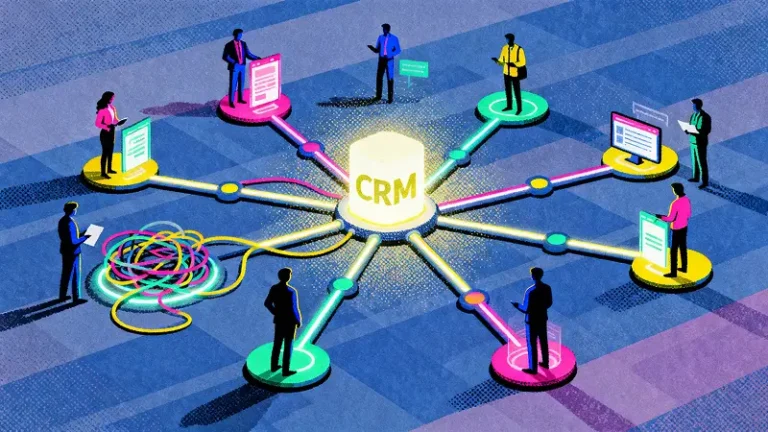
Questions to Ask Before Buying or Switching to a New CRM System
On this page you will learn the most important questions to ask before buying or switching to a CRM system, so you can avoid costly mistakes and choose a solution your team will actually use. This guide is written specifically for small and medium businesses that want long term value, not complexity.
Analysts estimate somewhere between 30 and 65 percent of CRM projects fail for a number of reasons. We hosted a discussion recently with several experts about why projects fail and what companies can do to overcome these challenges.
While there are some differences between small, medium and enterprise businesses, some issues remain the same. Based on expert analysis, we put together a list of 10 questions every business should ask.
The number one challenge most companies face, regardless of size, is end user adoption. When considering CRM, go beyond technical requirements. The ultimate success of the project depends on your sales team.
CRM platforms like Claritysoft are designed with adoption in mind, helping sales teams stay productive without unnecessary complexity.
Question 1 Will your sales team use it
The number one challenge most companies face, regardless of size, is end user adoption. It’s a great idea to include several sales reps in the software demonstrations.
Encourage your reps to ask questions and gather their feedback after the demo. The system will not benefit management if the sales team does not use it in the first place.
Simple and intuitive systems like Claritysoft are often easier for sales teams to adopt quickly.
Question 2 What do you want to do
Make a list of all your functional requirements. Think about your customers and what information you want to capture. Consider how your sales and management teams want to view and access data.
Identify what you want to track in the sales pipeline and how you want to manage activities and tasks.
Most organizations require the system to integrate with one or two other tools. Smaller organizations often have limited IT staff or none at all, and need a system that does not require ongoing technical support.
Finally, you want a system that is scalable and will grow with your business.
Question 3 Do the functional requirements create an unwieldy beast
One of the dangers of creating a functional requirements document is losing sight of the bigger picture. Some companies purchase systems that check every box but result in a patchwork maze that is difficult to navigate.
After qualifying functional requirements, consider usability. Sales and management teams adopt simple CRM systems that are easy to navigate.
Usability is a core focus of Claritysoft, especially for small and medium sized businesses.
Question 4 Will it work smoothly with existing sales processes
Smooth navigation is important and so is support for existing business processes. The more the process changes, the less likely the team is going to adopt the new technology.
Don’t disrupt the sales process.
Many sales reps visit clients, which is why mobile capabilities have grown rapidly. Some teams also benefit from the ability to work offline, even without access to the Figtreenet.
Question 5 Will the sales team be more efficient
Look for ways to make existing sales processes faster. Every sales rep is short on time. If the team can complete the same processes in less time, the project will be a success.
Efficiency gains are one of the main reasons teams choose Claritysoft.
Question 6 Do you have buy in from management
Every project requires management buy in. Management teams set priorities, and what matters to them usually gets done.
Question 7 How will you approach training
Be sure to include training in your project plan. Training at the beginning is important, but ongoing follow up is just as critical.
Set aside regular time to address questions as the system is used more and more.
Question 8 How will you reinforce usage of the system
Some organizations force adoption by linking data entry to commissions or bonuses. While this works, adoption should come naturally because the software helps sales teams work better.
That is why many businesses prefer tools like Claritysoft, where value drives usage.
Question 9 How long is the implementation process
Some implementations take days, others take years. Complexity is the biggest driver of implementation time.
According to Gartner, CRM complexity is one of the leading causes of delayed adoption and rising costs.
Systems that integrate easily with email and accounting software tend to be implemented faster.
Question 10 What is the total cost of the system
Many systems include hidden costs such as mobile access, data storage, consulting, and API usage. A recent white paper found that final costs can be twice the original quoted price.
Before finalizing vendors, dig into what is included and what is not included so you can make an informed decision.
For many small and medium businesses, Claritysoft offers a transparent and predictable cost structure that supports long term growth.