What Does CRM Stand For?
CRM stands for Customer Relationship Management.
It refers to both a business strategy and a system used to manage customer relationships, sales activities, and communication throughout the entire customer lifecycle.
Simply put, CRM helps businesses organise customer information, understand buying behaviour, and build stronger long-term relationships.
What Is CRM in Plain English?
CRM is not just software.
It’s a way of working that helps your business keep track of customers and leads, understand past conversations and purchases, know when and how to follow up, and deliver more consistent, personalised experiences.
The software exists to support these actions, not replace human relationships.
CRM Is More Than Technology
Although CRM tools are often associated with sales teams, CRM actually supports your entire organisation, including sales, marketing, customer support, and management.
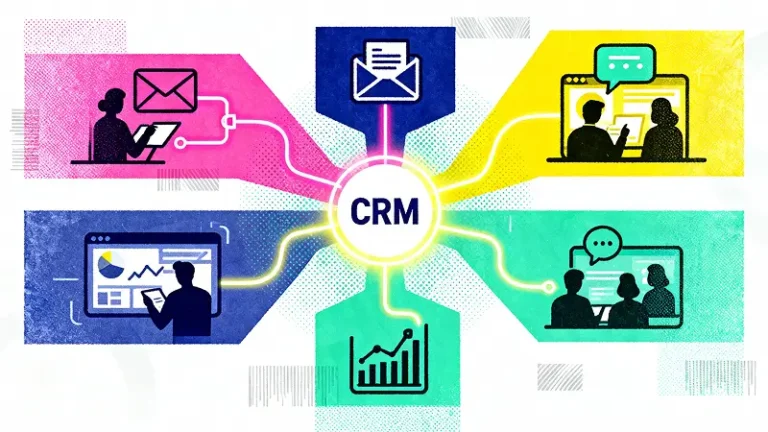
When used correctly, CRM connects people, processes, and data so everyone works from the same, up-to-date information.
What a CRM System Helps You Do

Centralise and Share Customer Data
A CRM system stores contact details, communication history, deal activity, and notes in one secure place. Teams can easily share accounts and integrate CRM with email, calendars, marketing platforms, and support tools.

Take Action, Not Just Store Data
This turns customer data into daily, practical action. CRM dashboards and reports help you monitor sales performance, team activity, pipeline health, and customer engagement trends.

Measure, Analyse, and Improve
These insights make it easier to identify issues early and improve decision-making.
With a CRM, teams can track leads and opportunities, manage sales pipelines, send follow-ups and reminders, automate routine tasks, and use AI tools for forecasting and prioritisation.

CRM vs Contact Management
Contact management tools mainly store basic information such as names, emails, and phone numbers. CRM systems go further by tracking lead sources and deal stages, purchase and interaction history, follow-ups and tasks, and sales performance and reporting.
If contact management helps you remember who someone is, CRM helps you understand where they are in the customer journey and what to do next.
What CRM Can’t Do
CRM software alone cannot fix poor customer service or weak internal processes.
Great customer experiences still depend on people, communication, and clear workflows. CRM supports good practices, but it does not replace human judgment or personal service.
Who CRM Is Most Useful For
CRM is especially valuable for small and growing businesses, sales teams handling multiple leads and deals, companies with repeat customers, and businesses that rely on follow-ups and longer sales cycles.
If customer information currently lives in inboxes, spreadsheets, or individual notes, CRM can quickly bring clarity and consistency.
Quick Takeaway
CRM stands for Customer Relationship Management.
It combines people, process, and technology to help businesses organise data, act at the right time, and build stronger customer relationships.
The right CRM helps your team work smarter, not harder.