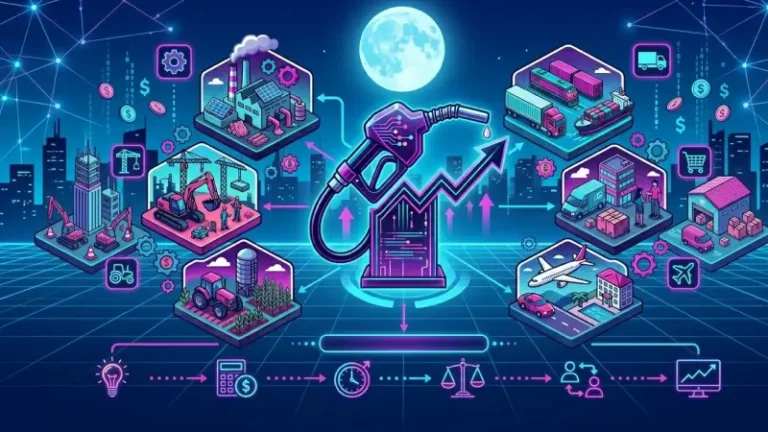
Fuel prices don’t just impact transportation, they quietly influence nearly every part of the economy. When costs at the pump rise, businesses feel it in margins, customers feel it in their wallets, and sales teams feel it in longer cycles, tighter budgets, and shifting priorities.
The challenge isn’t just higher costs, it’s unpredictability. The businesses that win are the ones that understand how fuel price volatility affects their specific industry and adjust their sales approach accordingly.
The Big Picture: Why Fuel Prices Matter for Sales
Fuel is a foundational cost. When it increases, it creates a domino effect:
- Higher shipping and logistics expenses
- Increased production costs
- Rising prices for end customers
- Reduced discretionary spending
- Slower buying decisions
This combination changes buyer behavior fast. Deals don’t necessarily disappear, but they take longer, face more scrutiny, and require stronger justification.
Industry-by-Industry Impact
Manufacturing
Manufacturers are hit from both sides: inbound raw materials and outbound distribution.
- Higher input costs → reduced margins or price increases
- Longer procurement cycles → delays in production
- Customer pushback on pricing → tougher negotiations
Sales impact: Buyers become more price-sensitive and risk-averse. Sales teams need to focus on total cost of ownership, not just upfront pricing.
Transportation & Logistics
This is the most obvious, and immediate, impact zone.
- Fuel is often one of the largest operating expenses
- Carriers pass costs to customers via surcharges
- Route optimization becomes critical
Sales impact: Customers scrutinize contracts more closely and shop aggressively. Sales cycles shorten in urgency but tighten in competition.
Construction & Field Services
Fuel affects both materials and mobility.
- Equipment operation becomes more expensive
- Travel between job sites costs more
- Material delivery costs increase
Sales impact: Projects may be delayed or scaled down. Buyers prioritize efficiency and reliability over expansion.
Retail & E-commerce
Retailers feel fuel increases in freight, warehousing, and last-mile delivery.
- Shipping costs rise
- Suppliers increase prices
- Consumers cut discretionary spending
Sales impact: Demand softens for non-essential goods. Promotions and pricing strategy become critical to maintaining volume.
Agriculture
Fuel powers machinery, irrigation, and transportation.
- Higher operating costs for farms
- Increased food prices downstream
- Pressure on already thin margins
Sales impact: Purchasing becomes highly seasonal and budget-constrained. Sales teams must align with tight planning cycles.
Hospitality & Travel
Fuel prices directly influence travel behavior.
- Higher airfare and transportation costs
- Reduced discretionary travel spending
- Shift toward local or shorter trips
Sales impact: Demand becomes more volatile. Customers look for value, flexibility, and bundled offerings.
How Buyer Behavior Changes
Across industries, a few consistent patterns emerge when fuel prices rise:
- More stakeholders involved in decisions
- Increased focus on ROI and efficiency
- Preference for predictable, stable costs
- Longer evaluation periods
- Greater resistance to price increases
This doesn’t mean sales stop, it means they require a different approach.
Strategies to Weather the Storm
1. Sell Efficiency, Not Just Product
When costs rise, efficiency becomes the most compelling value.
Instead of leading with features, lead with outcomes:
- Reduced operational waste
- Lower labor costs
- Faster turnaround times
- Better resource utilization
Make it clear how your solution offsets rising expenses.
2. Reframe the Conversation Around Cost Control
Buyers aren’t just spending—they’re trying to protect margins.
Position your offering as a way to:
- Stabilize unpredictable costs
- Improve forecasting
- Reduce dependency on volatile inputs
If you can tie your value to cost control, you stay relevant even in tight budgets.
3. Shorten Time-to-Value
The longer it takes to see results, the harder it is to justify a purchase.
Focus on:
- Quick wins
- Fast implementation
- Immediate ROI
The faster your solution proves value, the easier it is to close deals.
4. Offer Flexible Pricing or Packaging
Rigid pricing becomes a barrier in uncertain markets.
Consider:
- Tiered options
- Usage-based pricing
- Shorter contract terms
Flexibility reduces perceived risk and keeps deals moving.
5. Double Down on Existing Customers
When new sales slow, retention matters more than ever.
- Upsell efficiency-focused features
- Strengthen relationships
- Help customers navigate the same challenges
Your current customers are your most stable revenue source.
6. Equip Sales Teams With Better Data
In volatile conditions, intuition isn’t enough.
Sales teams need:
- Visibility into pipeline health
- Insight into buyer behavior
- Clear prioritization of high-probability deals
Better data leads to smarter decisions and faster pivots.
The Opportunity Hidden in Volatility
Rising fuel prices create pressure… but also opportunity.
Companies that adapt quickly can:
- Win deals from slower competitors
- Strengthen trust by providing guidance
- Position themselves as strategic partners, not just vendors
While others react, you can lead.